


Yes, I used AI to write this article. Because after reading post after post about GEO on LinkedIn, even I had lost track of what it actually meant. Sometimes the best way to untangle a subject is to ask the machine that’s partly responsible for it.
You’ve seen it scroll by ten times this week. GEO this, Generative Engine Optimization that. Nicely formatted posts, full of bullet points, and by the end you close the tab without really knowing what any of it means in practice.
That’s fine. It took me a while too. So here’s what I wish I’d read from the start.
What GEO actually is
Classic SEO, you know it. You optimize your content to show up in Google results. People see links, they click, they land on your site.
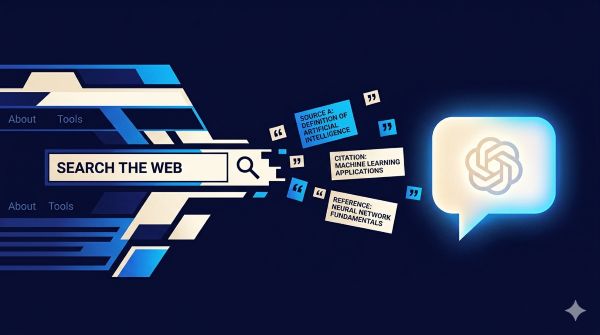
GEO is the same logic, but for a different kind of engine. ChatGPT, Perplexity, Google AI Overviews… These tools no longer show a list of links. They write a direct answer. And to build that answer, they pull from sources. GEO is the work you do to become one of those sources.
Simple version: SEO chases the click. GEO chases the citation.
Why everyone’s talking about it now
Google rolled out AI Overviews in late 2024. Instead of ten blue links, you land on an automatically generated summary at the top of the page. Publishers panicked, SEOs pulled out their spreadsheets, and LinkedIn found its new magic word.
Except Google quickly rolled back the display of those summaries for commercial and local queries. Less visible than expected. The hype took a hit.
So here we are with a real topic that’s still fuzzy around the edges. And a lot of people talking loudly without actually explaining much.
What it changes for a site like yours
Three concrete things.
First, your content needs to answer a specific question. Not dance around a keyword and hope for the best. Generative engines love direct answers, clear definitions, well-structured formats. If your article takes 300 words to get to the point, it’ll be ignored.
Second, your credibility matters more than ever. LLMs favor sources that seem trustworthy, cited elsewhere, specialized on a topic. Topical authority, which classic SEO already valued, becomes genuinely central.
Third, structured data is no longer optional. Schema.org, FAQ schema, HowTo… Not glamorous, but it helps models understand what you’re offering. The kind of technical detail you always push to later. Now’s the time.
GEO vs SEO: it’s not a fight
A lot of LinkedIn posts frame them as opposites. It’s a false war. GEO doesn’t replace SEO. It layers on top.
Good content, well structured, written for humans, is still the foundation. The difference is that today “the engine” might be an LLM choosing whether to cite you in its summary or not. Everything you’ve built in SEO still matters. You just need to add this new layer on top.
What we still don’t know
Honestly: GEO is still a work in progress. There’s no clear metric. We don’t measure AI citations the way we measure Google rankings. Tools are only just beginning to appear. Semrush and Ahrefs are starting to integrate AI visibility features, but we’re nowhere near the maturity of classic SEO.
We’re learning as we go.
Where to start
Take your three or four best-performing articles. Ask yourself whether an LLM could extract a useful answer from them in thirty seconds. If the answer is no, that’s your starting point: restructure, clarify, add markup.
Not sexy. But concrete. And exactly what everyone on LinkedIn keeps avoiding saying out loud.